
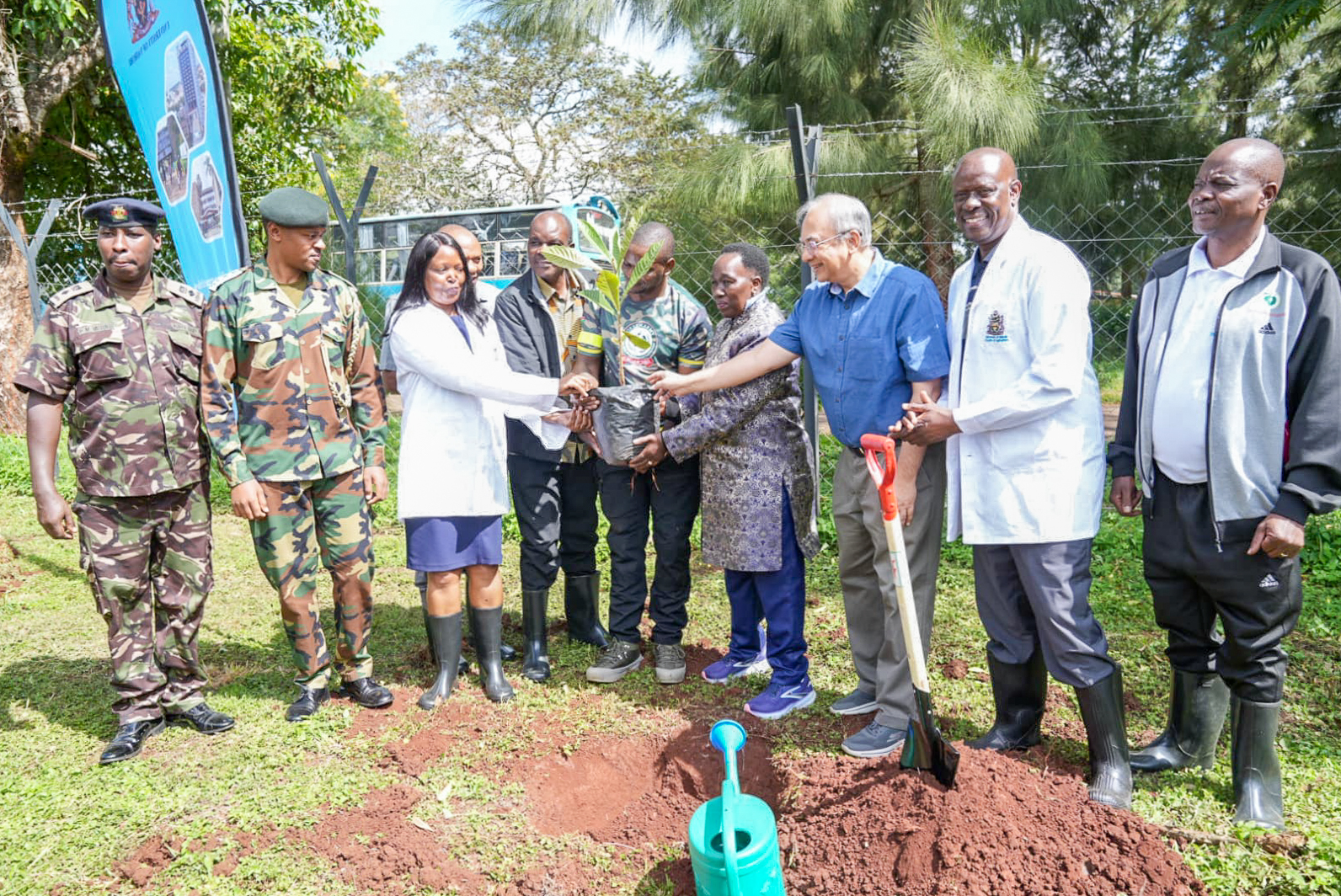
University management and partners participate in the annual tree planting exercise.
The University of Nairobi joined national partners for the Annual Tree Planting and Growing Initiative held on April 2, 2026, at the Upper Kabete Campus. This initiative continues to reinforce the institution’s commitment to environmental sustainability and hands-on learning.
Led by Vice-Chancellor, Prof Margaret Jesang Hutchinson, the exercise brought together staff, students and stakeholders to promote climate resilience, biodiversity conservation and land restoration. Activities began at the Kantaria Agricultural Technology & Innovation Centre (KATIC), where participants received practical training on tree selection, planting and post-care to improve survival rates.
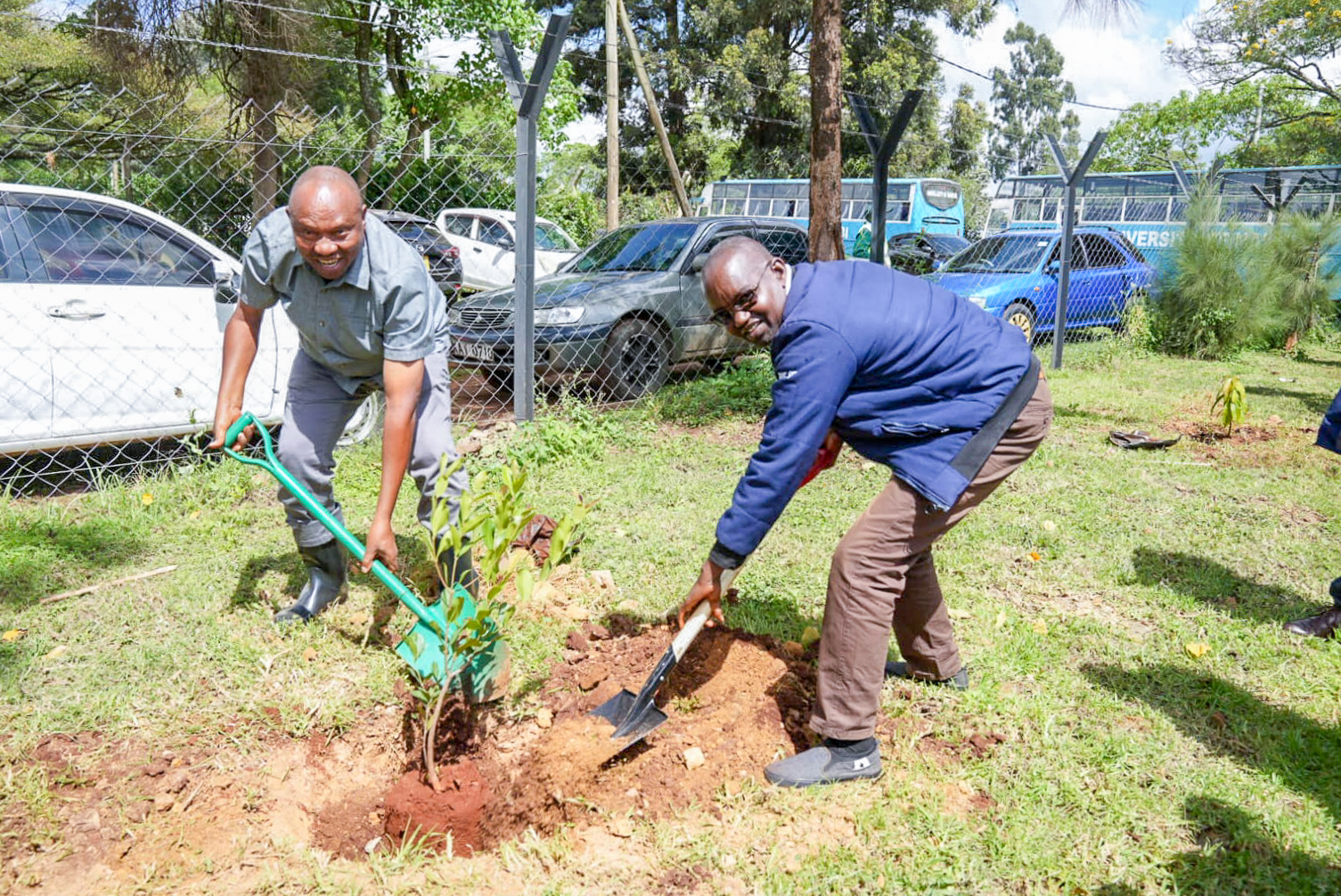
The initiative was supported by partners including Safaricom PLC, the National Commission for Science, Technology and Innovation (NACOSTI), the Kenya Defence Forces, the Kenya Forest Service and the National Research Fund, who collectively donated 10,500 seedlings, including fruit and indigenous tree varieties.
The University aims to plant 130,000 trees annually in support of Kenya’s national target of 15 billion trees, with an emphasis on survival rates, species diversity and ecosystem restoration rather than the number of trees planted. Since 2022, collaboration with the National Commission for Science, Technology and Innovation (NACOSTI) has achieved over 80 per cent seedling survival, supported by structured training and follow-up care.
In her remarks, Prof Margaret Hutchinson highlighted the importance of partnerships, research and consistent maintenance in ensuring long-term impact. “Healthy ecosystems are vital for food security, climate regulation and livelihoods, reaffirming the University’s role in advancing sustainable development through teaching, research and community engagement,” she added.
The exercise concluded with the planting of fruit and indigenous trees across designated sites, underscoring a shift from tree planting to tree growing through sustained care, monitoring and partnerships aimed at long-term ecological resilience.
- Log in to post comments


