
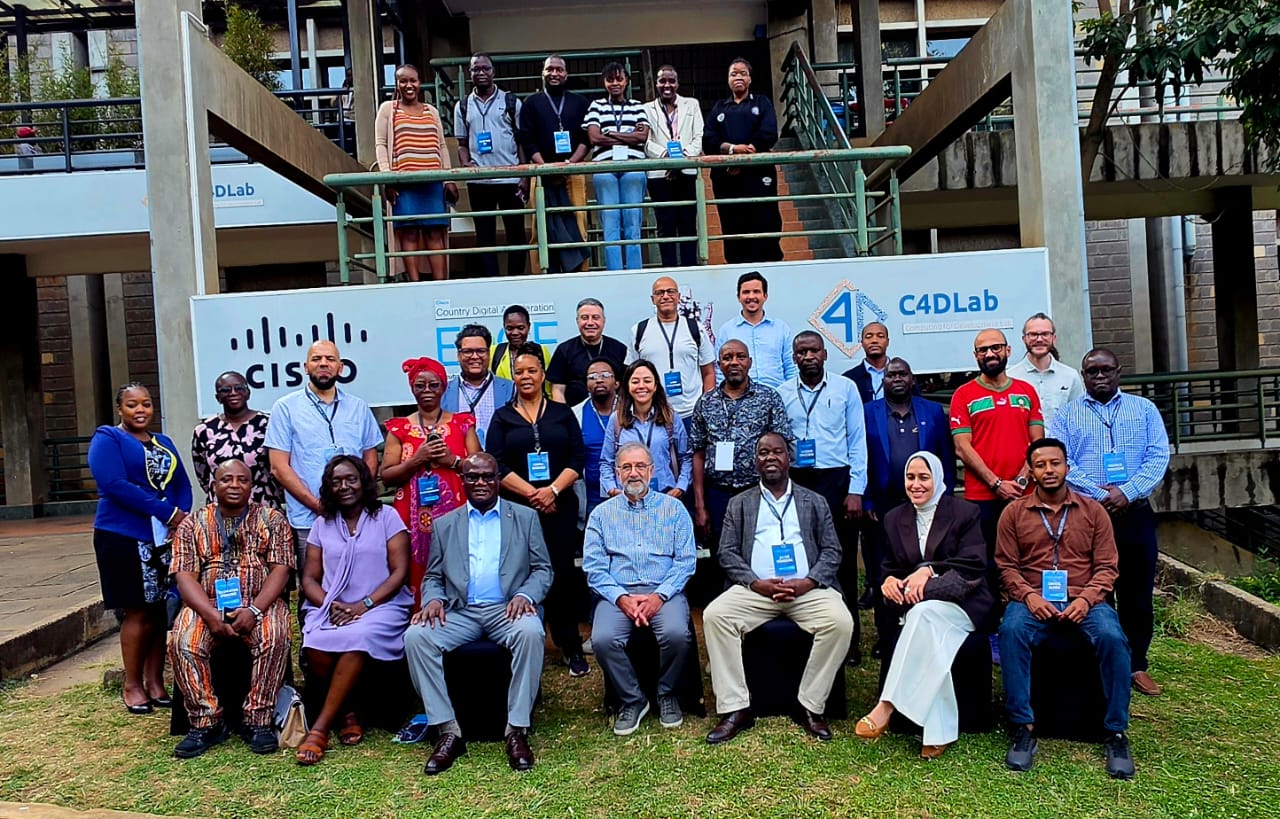
The University of Nairobi, through the C4D Lab at Chiromo Campus, hosted a three-day workshop from 12–14 August 2026 that brought together participants from universities, industry, government and partner institutions across Africa to explore the application of Design Science and Artificial Intelligence (AI) in developing practical, human-centred solutions to societal challenges.
The workshop, titled “Design Science and AI: Engaging Stakeholders – An Evidence-Based Assessment of the 5C Process,” provided participants with an opportunity to examine how evidence-based design approaches and emerging technologies can strengthen research, innovation and problem-solving.
The workshop was officially closed on Friday, 14 August 2026, by the Deputy Vice-Chancellor, Finance, Planning and Development, Prof. Josiah O. Aduda, on behalf of the Vice-Chancellor.
Participants were introduced to the 5C Design Process, an iterative and collaborative approach that supports problem identification, concept development, stakeholder engagement and evidence-based decision-making. Through interactive sessions, participants explored how the process can be applied to address complex challenges while ensuring that solutions are grounded in real-world needs.
A key focus of the workshop was the emerging role of Artificial Intelligence in design activities. Participants explored AI in different capacities, including as a tool, teammate and coach, and examined applications such as team formation, functional decomposition, concept generation and value opportunity analysis.
The discussions highlighted the importance of balancing technological innovation with human judgement, local knowledge and stakeholder perspectives. Participants noted that while AI can enhance design processes and support complex problem-solving, meaningful and sustainable solutions require active engagement with the people and communities for whom solutions are being developed.
The workshop also provided a platform for participants to initiate collaborative projects aimed at translating the knowledge and approaches gained into practical outcomes in research, education, innovation and community development.
In his closing remarks, Prof. Aduda underscored the importance of sustaining the momentum generated by the workshop beyond the three-day engagement. He noted that the ultimate measure of the workshop's success would be reflected in the partnerships sustained, projects advanced, students benefiting from the experience, and solutions reaching communities that need them.
The workshop contributes to the University of Nairobi's commitment to advancing interdisciplinary research, innovation, engineering and science education, as well as strengthening collaboration with stakeholders and institutions across Africa.
It further creates opportunities for participating institutions to work together in applying emerging technologies and evidence-based design approaches to complex societal challenges.
The University of Nairobi appreciates the facilitators, organisers, partner institutions and participants for their valuable contributions and commitment to strengthening collaborative research, innovation and stakeholder engagement across Africa.
- Log in to post comments


